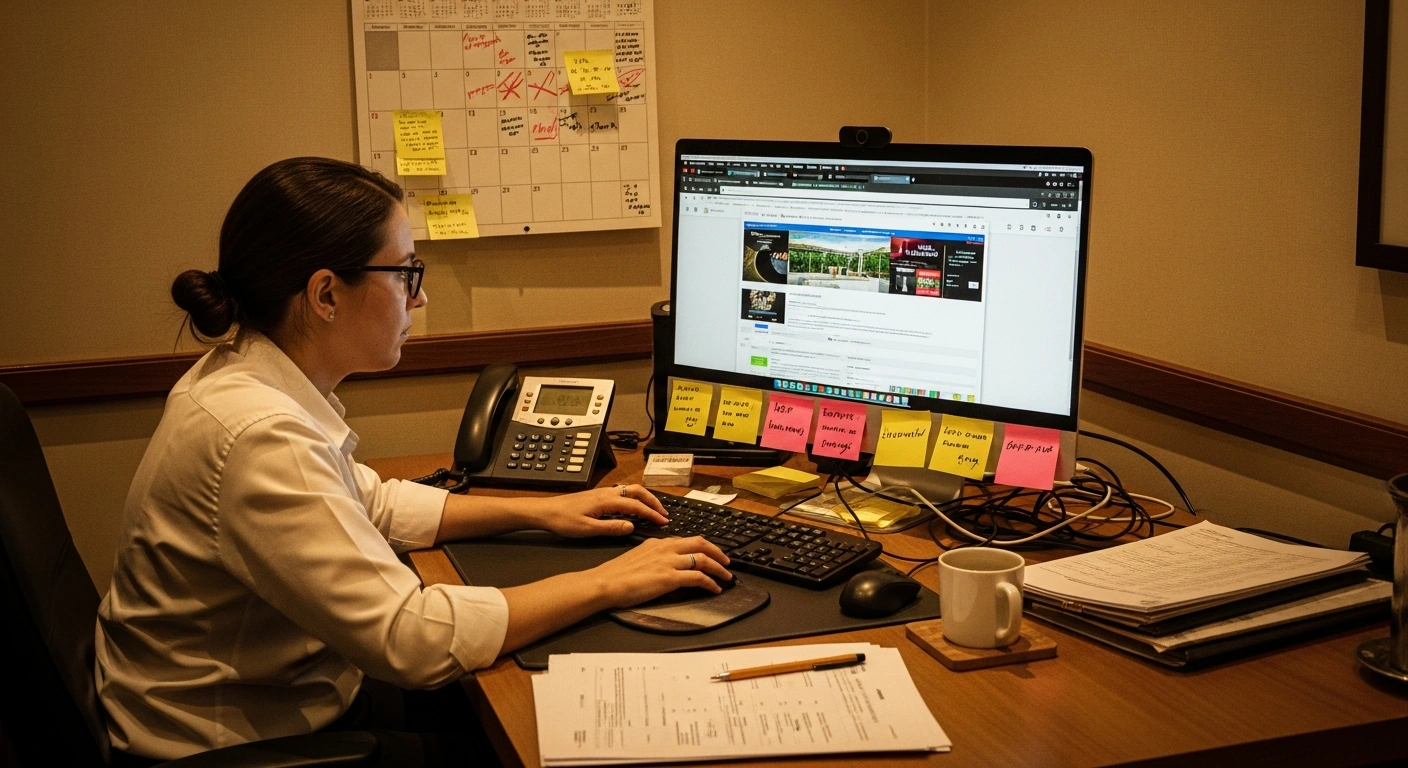
The manual channel management trap
A hotel listed on Booking.com, Expedia, Airbnb, and its own website with rates managed manually is making dozens of update decisions every week. When a room sells on one platform, the manager needs to close availability on three others. When rates need to change for a peak period, they need to be updated individually on every channel. When a special promotion runs, it needs to be applied everywhere consistently.
In practice, this never happens perfectly. The phone rings during a rate update. A last-minute booking comes in before the manager closes availability on the other channels. A promotional rate gets applied on Booking.com but not on Expedia. Each of these moments creates a cost sometimes a minor rate discrepancy, sometimes an overbooking, sometimes a missed sale because a room appeared sold out when it was actually available.
Where the money is actually leaking
Overbookings
An overbooking caused by slow manual availability updates typically costs a hotel two to three times the nightly room rate to resolve relocation costs, compensation, and the permanent damage to the guest relationship. A single overbooking per quarter at a $150 property costs approximately $900 to $1,350 per year in direct costs, plus the review damage that follows.
Rate disparities
When your rate on Booking.com differs from your rate on Expedia, several bad things happen simultaneously. OTA algorithms detect the disparity and can penalize ranking on the lower-rate platform. Savvy guests notice the inconsistency and lose trust. Rate parity clause violations can result in OTA penalties. A channel manager eliminates this by pushing rate changes to all platforms simultaneously the moment you make them.
Missed demand
A room that shows as unavailable on two platforms because a manager has not gotten around to closing it after a different booking sells is lost revenue. Conversely, a room that shows as available after an overbooking situation is a crisis waiting to happen. Real-time two-way synchronization between your PMS and all channels prevents both scenarios.
Management time cost
The most overlooked cost of manual channel management is the time it consumes. A hotel manager spending two hours per day on rate and availability updates across five platforms is spending 60 hours per month roughly $900 to $1,500 in labor cost if that time were billed at a modest rate on a task that a channel manager automates in milliseconds.
The right question is not whether you can afford a channel manager. It is whether you can afford not to have one. At $100 to $200 per month for a property-appropriate solution, the ROI from eliminated overbookings alone typically justifies the cost within the first 60 days.
Choosing the right channel manager for a Latin American property
Not every channel manager connects to the OTAs most relevant to the Latin American market. Before selecting a platform, verify that it connects to the specific OTAs driving your bookings Booking.com and Expedia at minimum, plus any regional platforms you use. Spanish-language support and pricing in USD (relevant for Costa Rica and dollarized economies) are also worth confirming.
Our channel management service covers evaluation, selection, and full configuration of the right platform for your property. We work with SiteMinder, Cloudbeds, RoomCloud, and others depending on property size and existing PMS. For context on the broader OTA strategy these tools support, read the OTA trap and how to escape it.
Keep reading
Frequently asked questions
A channel manager is software that connects your property management system to all your OTA distribution channels simultaneously. When a booking comes in from any source, availability updates automatically across every connected platform in real time. This eliminates the manual update cycle that causes overbookings, rate disparities, and missed sales.
Channel managers for independent boutique hotels typically cost between $80 and $250 per month depending on the number of connected channels and the platform. SiteMinder, Cloudbeds, and RoomCloud all offer plans suitable for properties with 10 to 50 rooms. The investment is recovered quickly through eliminated overbooking costs and time savings.
A property management system (PMS) manages your internal hotel operations reservations, check-in/check-out, housekeeping, billing. A channel manager connects your PMS to external distribution channels like OTAs. Many modern platforms combine both functions, but they can also be separate systems connected via API integration. A channel manager without a PMS is common for smaller properties.
Yes. A channel manager pushes rate changes to all connected channels simultaneously, eliminating the manual update delays that create rate disparities. Some platforms also include rate parity monitoring tools that alert you when a rate discrepancy is detected across channels, allowing you to resolve it quickly before OTA algorithms or guests notice.
SiteMinder, Cloudbeds, and RoomCloud are the most commonly used platforms among independent hotels in Costa Rica and Latin America. They have strong connectivity to Booking.com, Expedia, Airbnb, and regional platforms, offer Spanish-language interfaces, and have local support resources. The best choice depends on your property size, PMS, and specific OTA connections needed.
Find out exactly what manual channel management is costing your property
Our Revenue Audit identifies channel management inefficiencies and quantifies what they are costing you. We then configure the right solution to eliminate them.
Book your free Revenue Audit✓ No commitment ✓ 30-minute call ✓ Real insights, guaranteed