What demand forecasting actually means
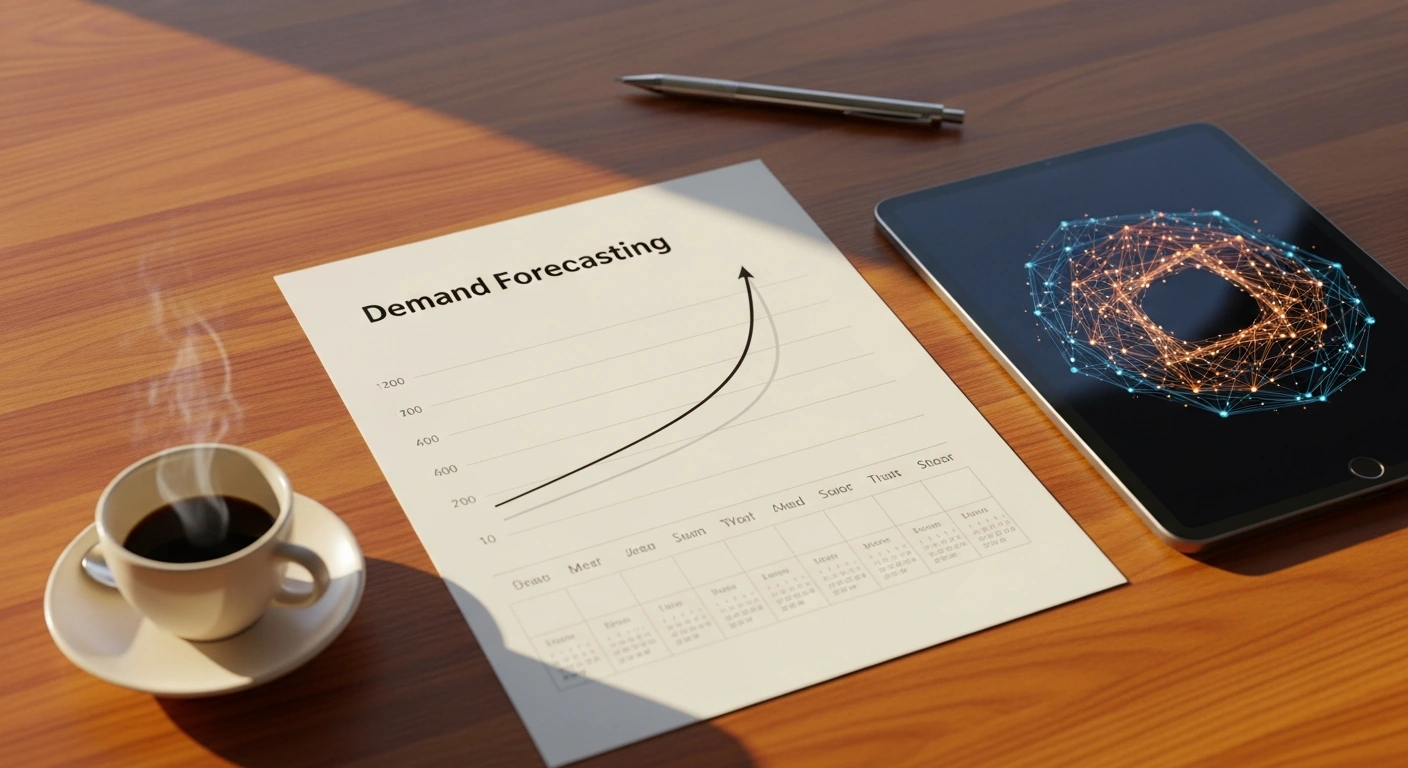
Demand forecasting is predicting how many room nights you will sell at a given price on a given date, before that date arrives. A hotel that can accurately forecast demand 30, 60, or 90 days out can make pricing decisions today that capture revenue that reactive pricing will always miss.
Traditional forecasting relied on a revenue manager reviewing historical occupancy reports and making educated adjustments. AI forecasting automates and dramatically improves this process by analyzing far more data simultaneously your own booking history, competitor pricing, local event calendars, weather patterns, search trend data, and market-wide occupancy signals.
How AI forecasting works in practice
At its core, an AI demand forecasting tool ingests your historical booking data and trains a machine learning model on it. That model learns the patterns specific to your property when bookings accelerate, how far in advance your typical guest books, which room types sell out first and at what price point, how your occupancy responds to competitor rate changes.
Once trained, the model generates forward-looking demand predictions for each date in your booking window. When it detects that booking pace for a specific date is running ahead of historical norms a sign of elevated demand it triggers a rate increase recommendation. When pace is lagging, it suggests promotional tactics to stimulate bookings before the date arrives.
The key difference from manual forecasting is speed and granularity. A human reviewer checks rates periodically. An AI tool monitors every incoming booking signal continuously and adjusts in real time.
What signals AI tools actually monitor
- Booking pace: How quickly your calendar is filling for future dates compared to the same period last year
- Competitor rates: What properties in your comp set are charging across OTA platforms in real time
- Market demand signals: Broad OTA search volume for your destination
- Local events: Conferences, festivals, sporting events, and holidays that drive demand spikes
- Historical patterns: Day-of-week, seasonal, and weather-related demand variations specific to your property
- Lead time patterns: How far in advance your guests typically book and how that varies by segment
What to realistically expect
AI demand forecasting tools will not make you a perfect pricing machine overnight. The model needs historical data to train on properties with less than 12 months of booking history will see less accurate predictions in the early months. The tool also requires clean, complete data. Incomplete records from a transition between PMSs or an inconsistent rate structure will produce less reliable outputs.
What you can realistically expect within 90 days of implementing a well-configured AI forecasting tool is: fewer instances of underselling during peak demand, a more defensible low-season pricing strategy, and a significant reduction in the time your team spends manually reviewing and adjusting rates.
The compounding effect: The longer an AI forecasting model runs on your property's data, the more accurate it becomes. A model that has seen two full seasonal cycles at your property will predict demand with far more precision than one working from six months of history. This is why starting sooner matters every month of data is an investment in future pricing accuracy.
For the broader context of AI in hotel revenue management, read how AI is transforming revenue management for boutique hotels. To understand the metrics these tools are optimizing, see our guide on RevPAR vs ADR for Costa Rica hotel owners.
Keep reading
Frequently asked questions
Most AI forecasting tools require at minimum 12 months of historical booking data including reservation dates, stay dates, room types, rates charged, and channel source. Some tools can work with less history but produce less accurate predictions in the early months. Clean, consistent data from your PMS is the most important input.
A revenue management system (RMS) is the broader platform that handles pricing strategy, rate distribution, and reporting. Demand forecasting is one component of a full RMS. Some standalone tools focus purely on forecasting and integrate with your existing channel manager and PMS, while full RMS platforms include forecasting as one of many features. For most independent hotels, a focused forecasting tool integrated with a good channel manager is a more practical starting point than a full enterprise RMS.
Most modern AI revenue tools connect via API to the major channel management platforms including SiteMinder, Cloudbeds, and RoomCloud. The integration allows the forecasting tool to receive live availability and booking data and push rate recommendations back to your channel manager automatically. Always verify specific integration compatibility before committing to any platform.
Entry-level AI forecasting tools for independent hotels typically range from $100 to $400 per month depending on property size and feature set. RoomPriceGenie and Lighthouse are commonly used in the Latin American market with pricing in this range. The investment is typically recovered within the first 60 to 90 days through improved rate capture during demand peaks.
Most modern tools are designed for hotel operators, not data scientists. They present recommendations in plain language and require no programming knowledge. Setup typically involves connecting your PMS or channel manager via a guided API integration process. ECTM handles this setup as part of our revenue management service so you get the benefit of the technology without the technical overhead.
See AI-assisted revenue management in action for your property
We integrate AI demand forecasting into every revenue management engagement. Book a free audit and we will show you what the technology would look like applied to your specific property and market.
Book your free Revenue Audit✓ No commitment ✓ 30-minute call ✓ Real insights, guaranteed